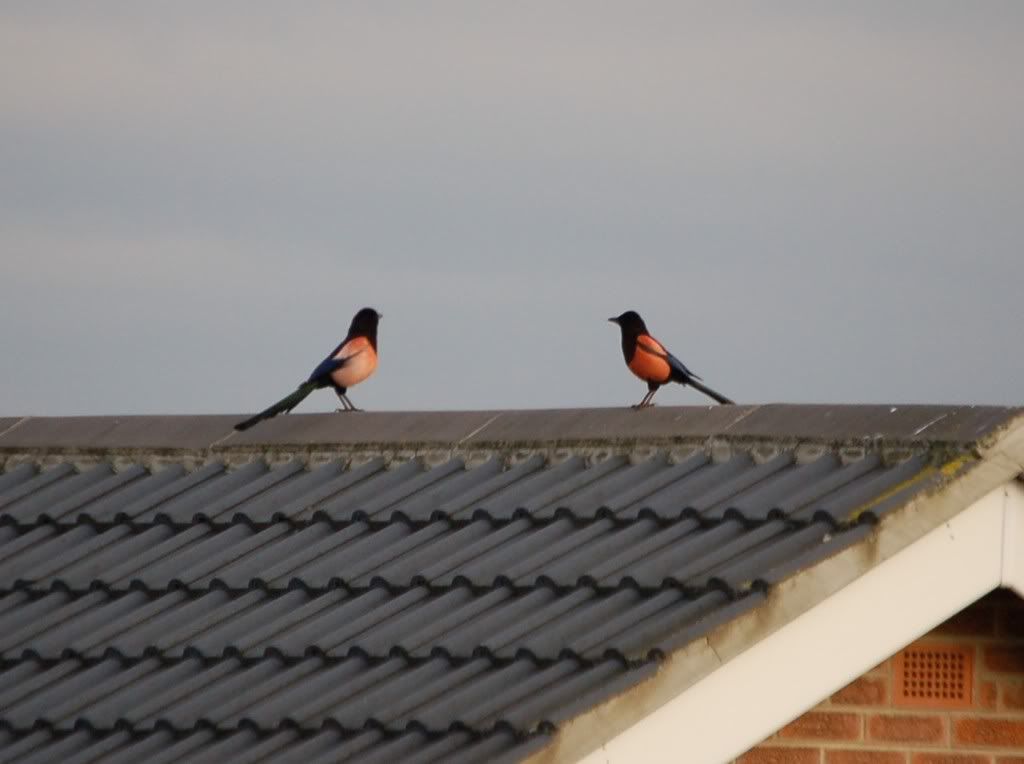
Carrion Crow (Corvus corone)
(Bird: Corvidae)
 |
| 19th June, 2013. Hythe Marina (Hampshire-UK). |
...........................................................................................................
...........................................................................................................
 |
| Though it appears leucistic, this bird probably just has worn feathers due to diet deficiency. This condition is quite common in crows all over the world. 29th August, 2014. New Quay (Wales-UK). |
Notes:
There is much that can be said about crows; since early times, these birds have featured in literature and mythology. At first appearance these birds appear black, but are in fact just very dark brown. Both crow and raven are often used interchangeably in modern society, but even in the scientific sense there is no clear dividing line unlike doves and pigeons. Usually ravens are the larger species with heavier bills with longer feathers, but there are exceptions.
There is much that can be said about crows; since early times, these birds have featured in literature and mythology. At first appearance these birds appear black, but are in fact just very dark brown. Both crow and raven are often used interchangeably in modern society, but even in the scientific sense there is no clear dividing line unlike doves and pigeons. Usually ravens are the larger species with heavier bills with longer feathers, but there are exceptions.
I have seen this species in:
- Europe (GB)
The first time I recorded this species:
4th April, 2007 at Weston Shore (Hampshire-UK).